Our Journey Through Time

1964

The Formation Years

On March 24, 1964, a significant event marked the squadron's formation: the issuance of the Royal Warrant. Flight Lieutenants Dennis Everall and Bill Lyth took the helm, leading without a designated headquarters. This led the group to convene at St. Mary's church hall, an area now known as Sainsbury's.

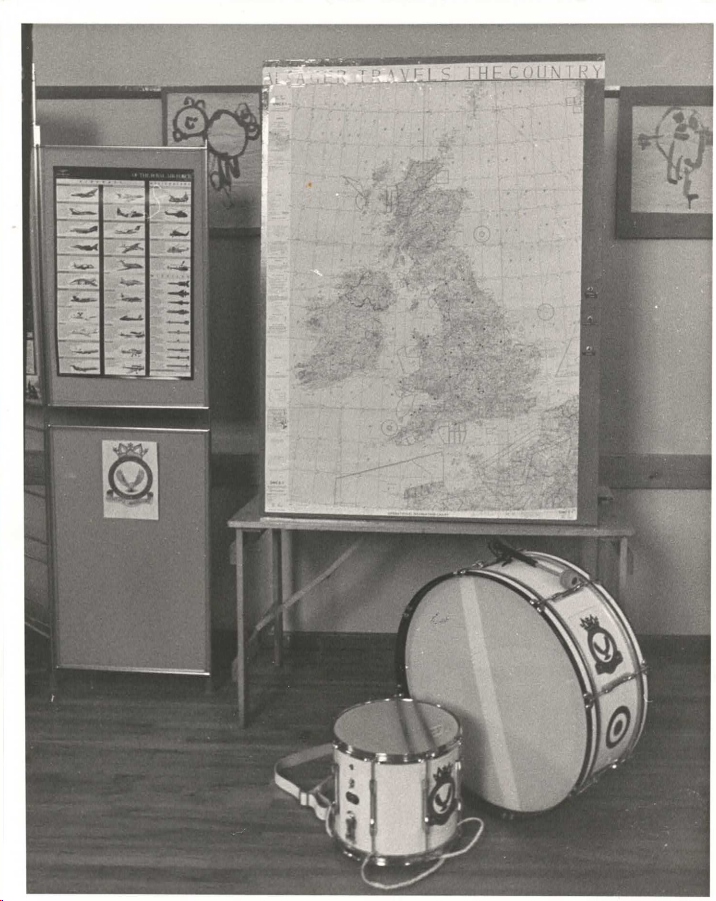
Despite the spatial constraints, the cadets' spirits remained high, immersing themselves in activities ranging from flying and drilling to mastering map usage. These opportunities provided the Alsager youth with unprecedented skills and experiences.

What is a Royal Warrant?

A Royal Warrant for the Royal Air Force Air Cadets is an official document issued by the monarch that grants the organisation the title "Royal" and formalises its existence under royal patronage. It outlines the framework, purpose, and organisation of the RAFAC, providing a structured and official basis for its operations.

The lack of a permanent headquarters did not deter the squadron's mission; instead, it galvanised the leadership and cadets to make the most of their circumstances. This period was characterised by a strong sense of camaraderie and a collective commitment to the squadron's success.

The early years set the tone for the squadron's relationship with the local community. The use of St. Mary's church hall highlighted the community's support for the squadron, fostering a mutual relationship that would grow stronger over the years. The challenges faced during these formative years played a crucial role in shaping the squadron's ethos, emphasising resilience, adaptability, and the ability to thrive under any circumstances.

1973

A New Home

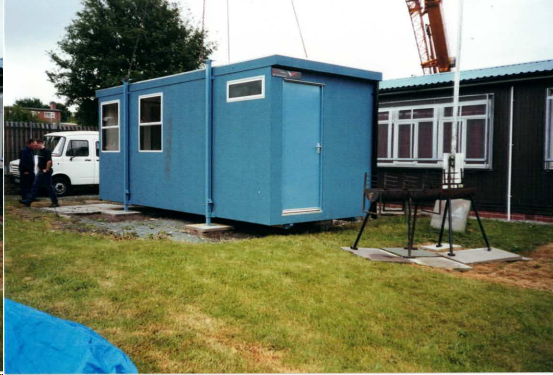
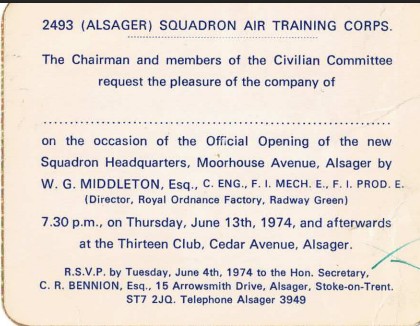
The grand unveiling of the squadron's new headquarters on Moorhouse Avenue on June 13, 1973 was a momentous occasion, marking the commencement of a new chapter in the squadron's history. This occasion was celebrated with a gathering at the Thirteen Club, reflecting the community's and squadron's shared enthusiasm for this new beginning.

Community Support: The land was generously donated by the town council and was prepared for construction by a community member who bulldozed it flat, demonstrating the community's investment in the squadron's future. The Ministry of Defence (MOD) then placed the building on the prepared land, underscoring a shared commitment to the squadron's development.

📜 Official Opening Invitation - June 13th, 1974

Official opening invitation for Squadron Headquarters 1974

The formal invitation to the official opening of the new Squadron Headquarters on Moorhouse Avenue, Alsager. The ceremony was performed by W. G. Middleton, Esq., C. ENG., F. I. MECH. E., F. I. PROD. E. (Director, Royal Ordnance Factory, Radway Green) on Thursday, June 13th, 1974, followed by a reception at the Thirteen Club.

The new base provided the squadron with a sense of identity and a focal point for its activities, facilitating greater coordination and fostering a stronger sense of unity among its members.

1975-1984

Expansion and Establishment

The period between 1975 and 1984 was significant for the squadron, building on the momentum generated by the establishment of the new headquarters. The squadron embarked on a period of expansion and establishment, leveraging its new facility to enhance operations, community engagement, and visibility.

Key Developments:

  • Operational Expansion: With a dedicated headquarters, the squadron expanded its operational capabilities, offering more diverse and comprehensive training programs.
  • Community Engagement: The new headquarters served as a hub for community engagement, allowing the squadron to host events, open days, and community activities.
  • Recruitment and Training: The permanent base was ideal for enhancing recruitment efforts and providing a structured environment for ongoing training and development.
  • Infrastructure Development: Additional facilities and improvements were added to the headquarters over the years, enhancing the squadron's capability to serve its cadets.

By 1984, the squadron was well-established, with a strong foundation at its headquarters that would continue to serve it for decades. This era represented a time of growth, consolidation, and deepening roots in the Alsager community.

1985-1994

Noteworthy Achievements

The decade of 1985 to 1994 was a transformative period for the squadron, marked by a blend of individual accolades, operational achievements, and significant strides toward inclusivity and diversity.

Integration of Female Cadets

Among the squadron's achievements, the integration of female cadets into the Air Training Corps stands out as a pivotal milestone, reflecting broader societal shifts towards gender equality. This inclusivity enriched the squadron's environment, fostering new perspectives and talents.

🏆 The Dacre Broach - A Historic Achievement

Cadet Warrant Officer Claire Walker received the prestigious Dacre Broach, an award that symbolises the pinnacle of recognition for female cadets within the entire Air Training Corps. This accolade, presented annually to the most outstanding female cadet across the entire ATC, is a testament to leadership, commitment, and excellence.

About the Dacre Broach

The Dacre Broach was named in honour of Air Commodore G.B. Dacre and his wife, Elizabeth, who presented it to the Air Cadets in 1982, coinciding with the year women were first admitted to the Air Cadets. Set with diamonds and other gemstones, it was awarded annually until 2015, when it was replaced by the Dacre Sword to align recognition with male cadets.

The broach gained additional prominence when it was presented to the Duchess of Cambridge, Kate, after she was appointed as the newest patron of the Air Cadets. She wore it at her first official engagement as Honorary Air Commandant in February 2016 and during a service at Westminster Abbey in July 2018.

Claire's attainment of the Dacre Broach had a profound impact on the squadron, elevating its stature and serving as a motivational beacon for other cadets. It illustrated the opportunities for recognition and individual growth within the ATC.

✈️ First Alsager Female Cadet to Receive Flying Wings

First Alsager female cadet to receive flying wings

Historical newspaper clipping featuring the first female cadet from Alsager to earn her flying wings

In a groundbreaking achievement for the squadron, a female cadet from 2493 Squadron became the first girl from Alsager to earn her flying wings. This milestone represented not only personal excellence but also the expanding opportunities for female cadets within the Air Training Corps.

Earning flying wings requires dedication, skill, and successful completion of rigorous aviation training. This achievement demonstrated that the squadron's female cadets could excel in all aspects of Air Cadet activities, including the prestigious flying scholarship program.

Other Milestones

  • FS Johnson was recognised as the longest-serving staff member, having joined as a cadet on January 7, 1984.
  • The squadron celebrated the promotion of Staffordshire Wing's first female Adult Warrant Officer within 2493.

🎺 2493 Squadron Band - A Musical Legacy Since the 1980s

One of the squadron's most distinguished traditions has been its marching band, established in the early 1980s. The band became a cornerstone of the squadron's identity, representing 2493 at countless events, parades, and community occasions throughout Alsager and beyond.

Musical Excellence and Community Pride

The squadron band evolved significantly throughout the 1980s and 1990s, culminating in a national tour and memorable collaborations with other military and civilian bands. Their performances became a source of immense pride for the squadron and the local community.

The band's repertoire included traditional military marches, ceremonial music, and popular tunes, all performed with precision and enthusiasm. Band members dedicated countless hours to practice and rehearsals, developing not only musical skills but also discipline, teamwork, and a sense of camaraderie that extended beyond their musical performances.

Legacy and Impact

The band's presence at local parades, Remembrance Day ceremonies, and community events helped cement the squadron's place in Alsager's civic life. Their distinctive uniforms and stirring music made them instantly recognizable and much-loved members of the community. The musical tradition established during this era continues to influence the squadron's cultural activities today.
2000s

Modernization and Renewal

During the mid-2000s, the squadron underwent transformative changes that reshaped its infrastructure and leadership dynamics significantly. This era was marked by a pivotal shift, as the leadership baton was passed to Steve Micklewright and Ian McLackland.

New Building Construction

Their tenure heralded a new chapter for the squadron, beginning with the demolition of the outdated squadron building. This significant step was taken to pave the way for the construction of a new, more modern facility, signifying a commitment to the future and the betterment of the squadron's facilities.

The cadets, displaying remarkable adaptability, transitioned to a temporary setup in the army cadet hut during this period of reconstruction. This move, while challenging, did not deter their spirit or commitment to the squadron's activities.

In 2013, the completion of the new building was a significant milestone. It symbolised a fresh start, providing the cadets with an updated and improved environment that enhanced their training and overall experience.

Leadership Transition

In 2014, the squadron welcomed a new Officer Commanding, Kieran Heathcote, who left the squadron in June 2016 for other challenges.

📸 Historical Photographs

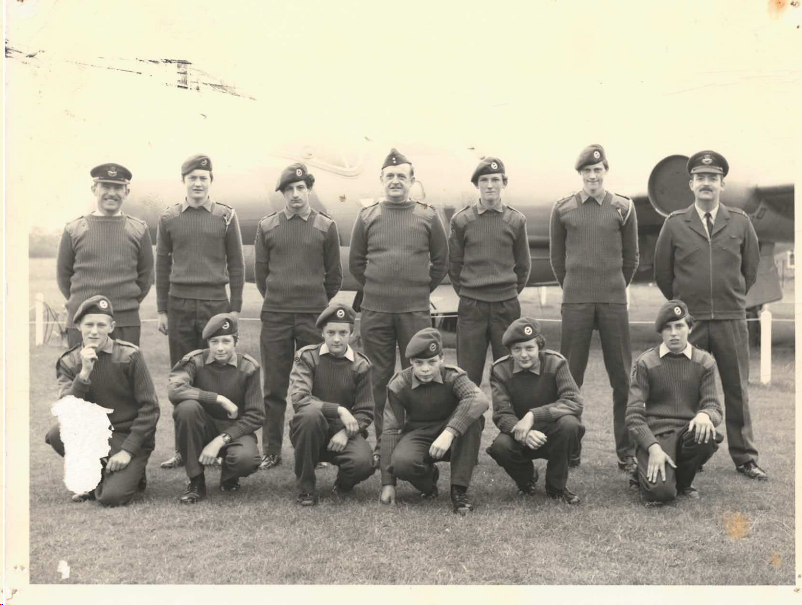
A glimpse into the squadron's rich history through archived photographs from various eras:

Current squadron site under construction

Land donated to 2493 Squadron - Local community flattened and prepared the site

Historical squadron activity

Squadron activities through the years

Original squadron location 1964-1974

Church community hall (now Sainsburys) - Squadron base 1964-1974

2016-Present

The Modern Era

Entering late 2016, the squadron embraced its current Officer Commanding, Flight Lieutenant Hearnshaw, marking the latest chapter in its storied history. This period reflects a continued commitment to excellence and adaptation to the evolving needs of youth development and aviation education.

Under Flt Lt Hearnshaw's stewardship, the squadron has not only sustained its forward momentum but has also explored new avenues for achievement and excellence. His tenure has been marked by a commitment to building on the solid foundation established by his predecessors, driving the squadron towards new heights.

Today's Squadron

The modern Air Training Corps, while maintaining its historical roots and military affiliation, focuses on a broader developmental agenda for young people:

  • Youth Development: Fostering leadership, discipline, teamwork, and personal growth through structured programs.
  • Aviation Education: Providing aviation-related training with opportunities for flying, gliding, and learning aerospace principles.
  • Adventurous Activities: Camping, hiking, sports, and adventurous training exercises designed to challenge cadets.
  • Community Engagement: Participating in community service and social development projects.
  • Leadership Training: Developing effective communication skills and team management abilities.
  • Career Opportunities: Providing a solid foundation for military and civilian careers, particularly in aviation and leadership roles.
  • Inclusivity and Diversity: Welcoming young individuals from diverse backgrounds and promoting a culture of respect and teamwork.

Historical Context: HMS Excalibur and Alsager's Military Heritage

Alsager's connection to military training predates the formation of 2493 Squadron. During and after World War II, the area was home to HMS Excalibur, a Naval establishment that played a crucial role in training.

HMS Excalibur's Story

HMS Excalibur was commissioned in Alsager, Staffordshire, just on the outskirts of the town. During the war, it functioned as a Royal Marine camp, and in 1946, it became a New Entry Training Establishment for training regular peacetime adult sailors.

Recruits came from various backgrounds, including Sea and Air Cadets. Some had been officers candidates ex-'Y' Scheme boys. They were formed into classes by Branch, with a Petty Officer Instructor in charge, and were schooled in the rules and customs of the Navy, seamanship, rifle drill, marching, PT and the divisional organisation.

Did You Know?

Many recruits had been Sea and Air Cadets, so the training was second nature to them. Warrant Officer Savage was the parade ground instructor whose bark was worse than his bite - he had a great sense of humour and expected his recruits to have one too!

Although the base no longer exists, remnants of its structures remain as part of the Excalibur industrial estate. The original corrugated iron 'blister' hut, which was the clothing issue store, was still visible for many years, along with more substantial buildings.

This rich military heritage in Alsager provided the perfect foundation for the establishment of 2493 Squadron and continues to inspire our commitment to excellence in youth training and development.

🎉 Celebrating 62 Years of Excellence 🎉

1964 - 2024

Six decades of inspiring young people, building character, and fostering a love of aviation in the heart of Alsager.

Be Part of Our Story

Join 2493 Squadron and become part of our continuing legacy of excellence, service, and achievement.

Join Us Today